
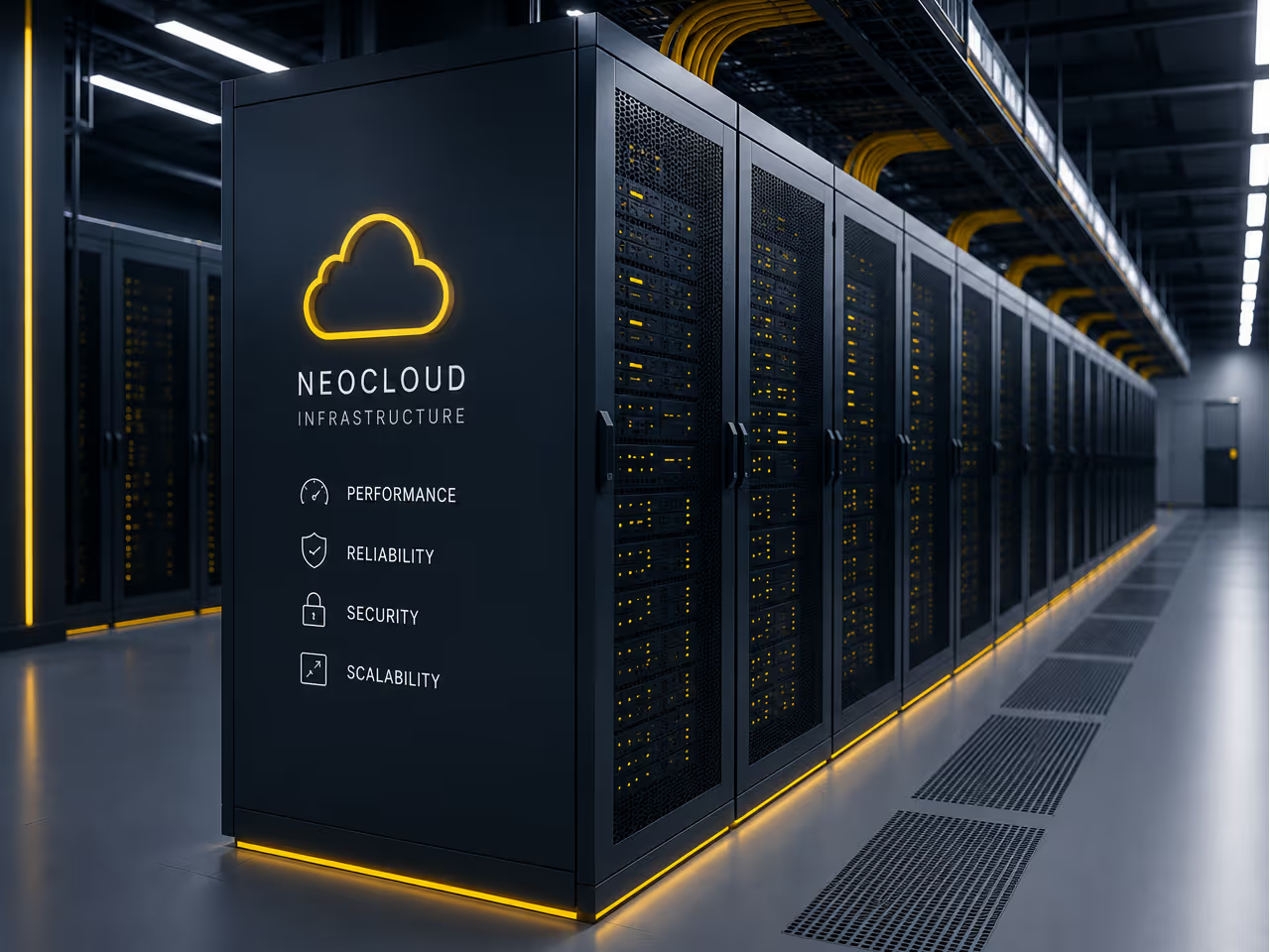
The Infrastructure Companies Behind the AI Boom
The rapid expansion of artificial intelligence has created a growing market for companies that provide the computing infrastructure needed to train and operate AI models. Among them are specialised data centre providers known as neoclouds.
Companies such as CoreWeave, Nebius, IREN and Applied Digital operate large data centres equipped with advanced computing hardware. They lease computing capacity to major AI developers, including OpenAI, Anthropic and Meta.
Although these businesses are less familiar to mainstream technology consumers, they have become an important part of the AI supply chain. Their infrastructure allows AI companies to access computing capacity without building every facility themselves.
However, their rapid expansion is increasingly attracting investor scrutiny because of the significant borrowing required to finance their operations.
Heavy Borrowing Creates Financial Exposure
Neocloud companies typically need to purchase expensive AI chips and build or secure data centre capacity before generating revenue from customers.
To finance this expansion, many rely on long-term customer agreements and use those contracts, alongside their computing equipment, as collateral for loans.
CoreWeave illustrates the scale of this financing model. According to the BBC report, the company has accumulated approximately $35.1 billion in debt.
Analyst Cory Johnson of IPO research firm The Quiet Period explained that lenders may consider the financial strength of major customers, such as Microsoft and Meta, when assessing lending risks.
This approach allows infrastructure providers to expand quickly, but it also creates exposure if customers reduce their spending or demand for computing capacity weakens.
Investors Reconsider Neocloud Valuations
The financial concerns have coincided with falling share prices across parts of the neocloud sector.
CoreWeave, Nebius, IREN and Applied Digital have experienced significant declines as investors reassess the companies' debt levels, growth expectations and dependence on large technology customers.
The market reaction has also been influenced by spending forecasts from major technology companies. Microsoft and Google recently projected lower AI spending than Wall Street analysts had expected, contributing to declines in neocloud shares.
Other developments have added to uncertainty. Microsoft's cancellation of a deal with UK-based neocloud provider Nscale, reportedly linked to power supply constraints, and Australian company Firmus shelving its planned public offering have raised further questions about the sector's expansion plans.
Crypto Mining Roots and the Shift to AI
Several neocloud companies have backgrounds in cryptocurrency mining.
CoreWeave, IREN, Core Scientific and Applied Digital initially operated in the crypto mining industry before moving towards AI infrastructure. Their existing computing facilities and technical capabilities helped them respond to growing demand following the launch of ChatGPT in 2022.
Nebius followed a different path. It was previously known as Yandex NV before separating from its former Russian parent business and adopting its current identity in 2024.
The transition highlights how infrastructure developed for one computing market can become valuable in another. However, the economics of AI infrastructure depend on continued demand, equipment utilisation and access to financing.
Analysts Warn of Consolidation
Industry forecasts suggest that the neocloud market could undergo significant consolidation.
Gartner analysts predict that 80% of neocloud companies could cease independent operations by 2030. Forrester analysts have also suggested that several providers may be acquired as financial pressures increase.
Elon Musk has separately warned that more than 200 neocloud companies could face failures or consolidation, although this remains his assessment rather than a confirmed industry outcome.
At the same time, US Treasury Secretary Scott Bessent has sought to downplay the concerns, describing neocloud companies as a relatively small component of the broader AI ecosystem.
Is the AI Infrastructure Boom Sustainable?
The central question is whether revenue from AI services will grow quickly enough to support the enormous investment in computing infrastructure.
Demand for AI computing remains significant, and neocloud providers continue to serve an important role by supplying capacity to companies developing increasingly sophisticated models.
However, their debt-heavy business models leave them vulnerable to higher interest rates, weaker customer spending and rapid changes in chip technology.
If AI demand continues to expand, infrastructure providers could benefit from long-term customer commitments and higher utilisation. If spending slows, companies with substantial debt and concentrated customer bases could face refinancing difficulties and pressure on profitability.
The neocloud market therefore offers an important view into the financial foundations of the AI boom. The technology industry's long-term growth will depend not only on developing more powerful AI systems but also on whether the infrastructure supporting them can generate sustainable returns.