Google's Market Value Drops by $500 Billion
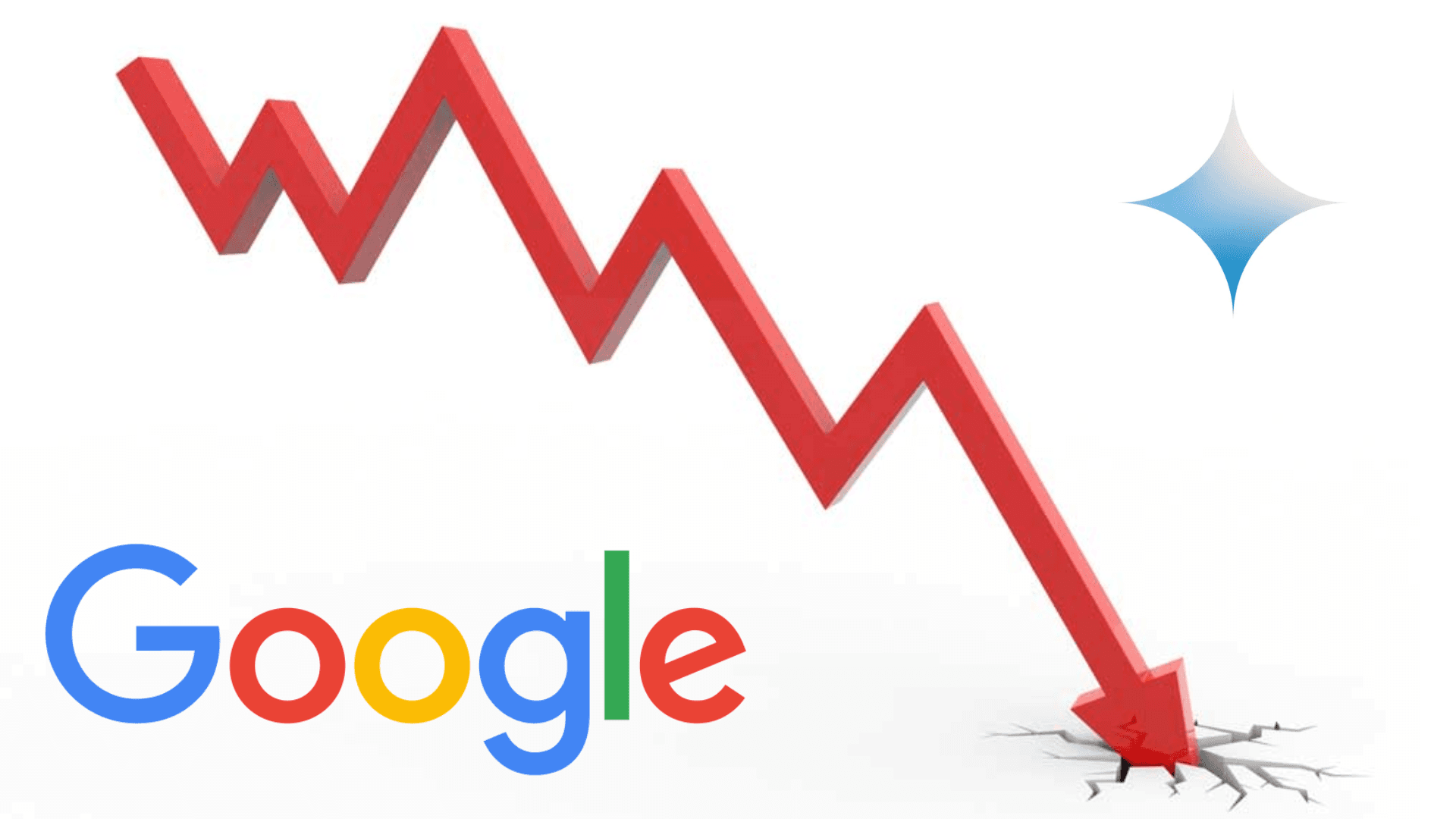
Google's parent company, Alphabet, has lost approximately $500 billion in market value following a sharp decline in its share price after reporting weaker-than-expected third-quarter 2026 financial results.
Alphabet shares fell approximately 12.9% on October 29, marking one of the company's biggest single-day declines. Investors reacted to slower advertising revenue growth, increasing artificial intelligence (AI) infrastructure spending and concerns about the profitability of Google's evolving search business.
The decline highlights a growing challenge for Google: although AI-powered search is attracting more users and generating longer queries, the company is still working to turn that engagement into advertising revenue at the same level as traditional search.
AI Search Changes Google's Advertising Model
Google's traditional search business generates substantial revenue by displaying advertisements alongside search results. Businesses pay to reach users based on their search queries, interests and purchasing intentions.
However, AI-powered features such as AI Overviews and AI Mode are changing how people interact with search.
Instead of clicking through multiple websites, users can receive conversational answers and recommendations directly within Google's search experience.
This creates a challenge for advertisers and Google alike. While users may spend more time interacting with AI-powered search, fewer traditional advertising opportunities may be available during those interactions.
Google Chief Business Officer Philipp Schindler acknowledged that the strong growth in AI Mode queries had affected revenue because these interactions currently generate lower advertising monetisation.
Search Advertising Growth Slows Despite Record Query Activity
Alphabet's third-quarter results revealed a slowdown in Google's core search advertising business.
Google Search advertising revenue reached approximately $63.4 billion, representing 12% year-over-year growth. This was slower than the 17% growth recorded in the second quarter and 19% in the first quarter of 2026.
Interestingly, Google reported that search query growth reached its highest level in five years.
CEO Sundar Pichai also highlighted that AI Mode queries are approximately three times longer than traditional searches. Around one in five AI Mode searches globally involves voice, images or documents.
These figures demonstrate that AI is changing search behaviour, but the additional engagement has not yet translated into equivalent advertising revenue.
Rising AI Investments Add Financial Pressure
Another major concern for investors is Alphabet's increasing investment in AI infrastructure.
The company spent approximately $51.4 billion on capital expenditure during the third quarter, primarily supporting data centres, computing infrastructure and AI development.
These investments contributed to negative free cash flow of approximately $9.1 billion during the quarter.
Alphabet's total revenue increased 25% year over year to $127.6 billion, although it fell slightly short of analyst expectations.
Google Cloud remained a strong performer, generating approximately $30.7 billion in revenue, an increase of 103% compared with the previous year.
Despite this growth, investors remain concerned about whether the company's substantial AI investments will generate sufficient returns.
Google Expands Advertising Across AI Search Platforms
Google is not abandoning its advertising business. Instead, it is experimenting with new ways to integrate advertisements into AI-powered search experiences.
The company is expanding advertisements within AI Overviews and AI Mode to international markets. It is also introducing multi-turn advertising formats in the United States, allowing advertisements to appear during follow-up questions in conversational searches.
These developments aim to create new advertising opportunities as users increasingly rely on AI to research products, compare services and make purchasing decisions.
Google believes that AI-powered search can create additional commercial opportunities, but it must demonstrate that these formats can deliver sustainable advertising revenue.
What Google's AI Search Shift Means for Digital Marketers
Google's changing search model could have significant implications for businesses, advertisers and digital marketing professionals.
1. Changing advertising opportunities
Brands may need to adapt their paid search strategies as advertisements become integrated into AI-generated answers and conversational search experiences.
2. Greater importance of search intent
Longer and more detailed queries could help advertisers understand customer requirements and purchasing intentions more effectively.
3. New challenges in performance measurement
Traditional metrics such as impressions, clicks and click-through rates may need to be evaluated alongside engagement and conversions from AI-powered search experiences.
4. Evolving SEO and GEO strategies
Businesses may need to combine traditional search engine optimisation (SEO) with Generative Engine Optimization (GEO) to maintain brand visibility across conventional search results and AI-generated answers.
The Future of Google's Advertising Business
Google's latest financial results highlight the complexity of transitioning from traditional search towards AI-powered discovery.
The company continues to attract users and increase search activity, but converting that engagement into advertising revenue remains a significant challenge.
The decline in Alphabet's market value reflects investor concerns about both slowing search advertising growth and the rising costs of competing in the AI market.
For digital marketers, advertisers and businesses, the shift signals an important change in how online discovery and advertising may work in the coming years.
Google's long-term success will depend on whether it can make AI-powered search commercially sustainable without weakening the advertising business that has supported its growth for decades.