
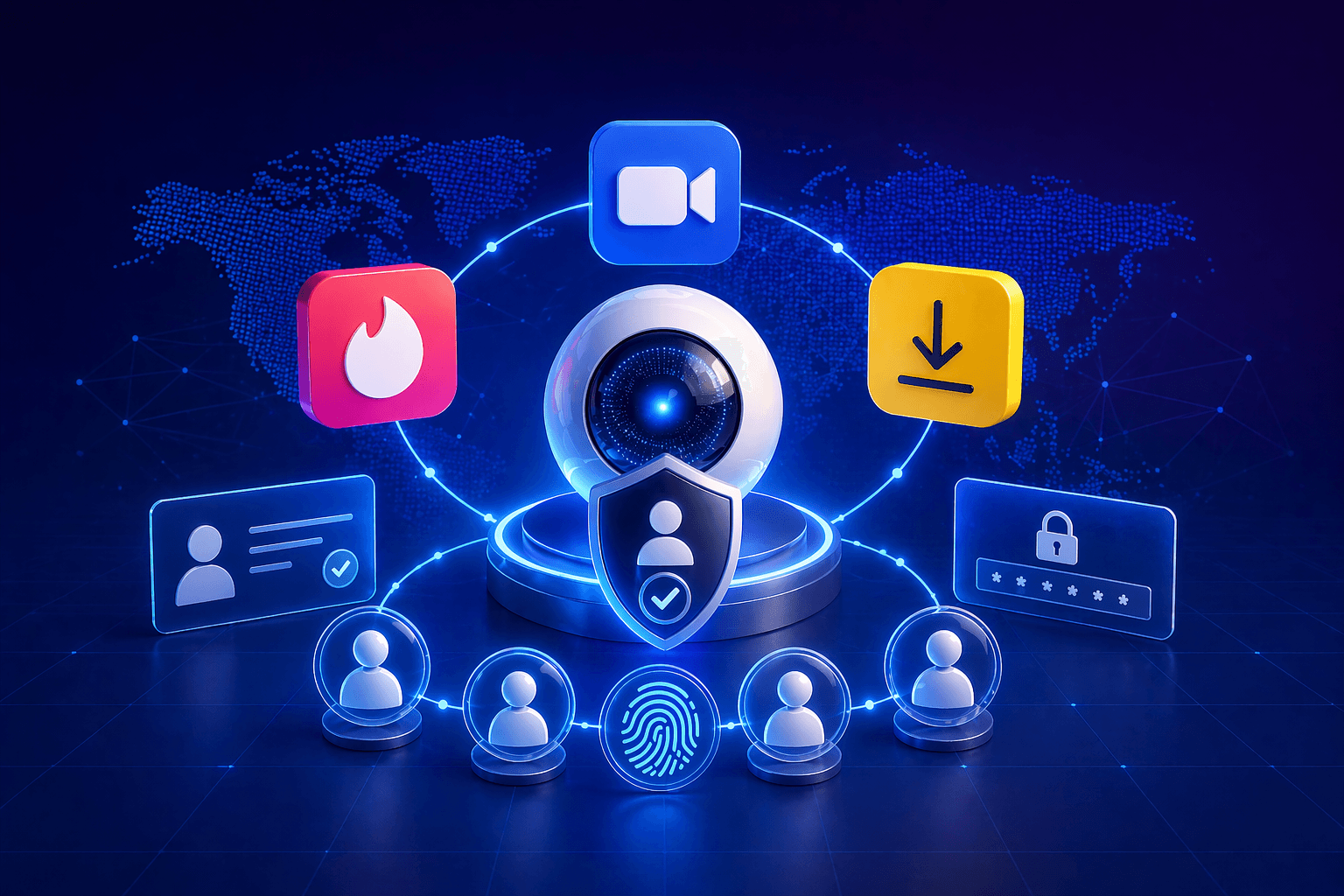
Tinder, Zoom, and DocuSign Adopt World ID Iris Scanning to Combat AI Bots and Deepfakes — Sam Altman's World Launches Major Proof-of-Human Upgrade
AI / AI Tech Trends | 4 min read
World (formerly Worldcoin; Tools for Humanity; co-founded and chaired by Sam Altman), has unveiled its most significant upgrade yet to World ID — positioning the system as "full-stack proof of human" infrastructure for consumers, enterprises, and AI agents. Announced at a live event in San Francisco on 17 April 2026, the upgrade includes major new platform partnerships with Tinder, Zoom, and DocuSign, alongside new tools for AI agent verification, a redesigned identity architecture, and the launch of World ID 4.0 as a portable authenticator. World's system relies on the Orb — a custom-built spherical biometric device that scans a user's iris in person, converting it into a unique anonymous cryptographic identifier. Images are deleted after processing; only anonymised fragments of the code are distributed across a network to confirm the person has not previously registered. The result is a credential that proves someone is a unique human online without revealing their identity or personal data. World reports 40 million application users, 18 million verified humans spanning six continents, and 450 million verifications completed.
"The world is getting close to very powerful AI, and this is doing a lot of wonderful things. We are also heading to a world now where there's going to be more stuff generated by AI than by humans."
— Sam Altman, Co-Founder and Chairman, Tools for Humanity / World
Tinder, Zoom, DocuSign — What Each Integration Does
On Tinder, users who complete the World ID verification process receive a "verified human" badge on their profile — plus five free Boosts (a paid feature that increases profile visibility by up to ten times for 30 minutes) as an incentive to verify. The integration addresses a documented crisis on the platform: romance scams cost US users more than $1 billion in a single year according to the FTC, with one user analysis estimating 30% of Tinder profiles encountered were AI-enhanced bots. A pilot of this integration ran in Japan earlier in 2026 and was successful enough to warrant a global rollout. Tinder's existing video selfie verification remains in place; World ID is an additional optional layer. On Zoom, a feature called "Deep Face" enables meeting hosts to verify that participants are real humans rather than deepfakes before joining a call — addressing the growing threat of AI-generated impersonation in business video conferencing. On DocuSign, World ID integration allows users to require proof-of-human verification for all parties to a digital agreement — ensuring signatures come from authenticated humans rather than AI agents. Reddit has also signalled it is exploring World ID as a solution to help users distinguish bots from real people.
AgentKit, Concert Kit, and Okta — Extending Proof of Human to the Agentic Web
Beyond consumer platforms, World is rolling out infrastructure for the emerging agentic web. AgentKit allows verified humans to delegate their World ID credentials to AI agents — enabling services to confirm that a real human authorised automated actions such as purchases or meeting bookings. A partnership with authentication firm Okta has created a system (currently in beta) that ties a World ID to a specific agent: when the agent operates on the web on a person's behalf, websites can verify a human is behind the behaviour. Concert Kit allows artists to reserve concert tickets exclusively for verified humans — taking direct aim at scalper bots — with an early test planned at a Bruno Mars World Tour show in San Francisco. Additional partnerships include Razer and Mythical Games for gaming and online community bot detection. World ID 4.0, the redesigned app, functions as a portable authenticator — allowing users to manage credentials, verify with third-party platforms, and control how their World ID is used across the internet. The upgrade also includes account-based identity, multi-key support, and recovery mechanisms. Despite its scale, World has faced significant regulatory scrutiny: Thailand ordered the deletion of 1.2 million iris scan records and suspension of operations in November 2025; Germany's data protection agency declared World in violation of data privacy rules in December 2024; and Brazil and several other countries have banned the service over privacy concerns.
Key Takeaways
- • World (Tools for Humanity; co-founded and chaired by Sam Altman; CPO Tiago Sada; formerly Worldcoin) has unveiled its largest World ID upgrade yet — "full-stack proof of human" infrastructure — at a live event in San Francisco, 17 April 2026. Scale: 40M application users; 18M verified humans across six continents; 450M verifications completed. System: Orb biometric device scans iris in person, generates unique anonymous cryptographic identifier; images deleted after processing.
- • Three major platform integrations: Tinder — verified human badge + five free Boosts for completing World ID verification; addresses $1B+ annual romance scam losses (FTC) and estimated 30% bot prevalence; Japan pilot successful, now global. Zoom — "Deep Face" feature verifying meeting participants are real humans, not deepfakes, before joining a call. DocuSign — proof-of-human verification required for all parties to a digital agreement, ensuring signatures come from authenticated humans.
- • Agentic web infrastructure: AgentKit — allows verified humans to delegate World ID credentials to AI agents, enabling services to confirm real human authorisation of automated actions (purchases, meeting bookings). Okta partnership (beta) — ties World ID to a specific agent so websites can verify a human is behind agent behaviour when it operates on their behalf. Concert Kit — reserves tickets for verified humans only; Bruno Mars World Tour San Francisco test planned. Additional partnerships: Razer, Mythical Games (gaming/online communities); Reddit exploring World ID for bot detection.
- • World ID 4.0: redesigned portable authenticator app — users manage credentials, verify with third-party platforms, and control how their World ID is used across the internet. New architecture features: account-based identity, multi-key support, recovery mechanisms. World uses the iris for verification because it is the most biometrically unique part of a person — more distinctive than a fingerprint. World ID operates without requiring personal information (no name, address); anonymised cryptographic identifier only.
- • Regulatory and privacy context: Thailand (November 2025) — ordered deletion of 1.2 million iris scan records and suspension of all operations. Germany (December 2024) — data protection agency declared World in violation of data privacy rules; ordered deletion of iris codes. Brazil and several other countries have banned the service. Critics have flagged the use of biometric scanning via the Orb as controversial. The central tension: as AI-generated bots, deepfakes, and autonomous agents make it increasingly difficult to distinguish humans from machines online, iris-based proof-of-humanity systems offer a potential solution — but at the cost of submitting biometric data to a third party.