
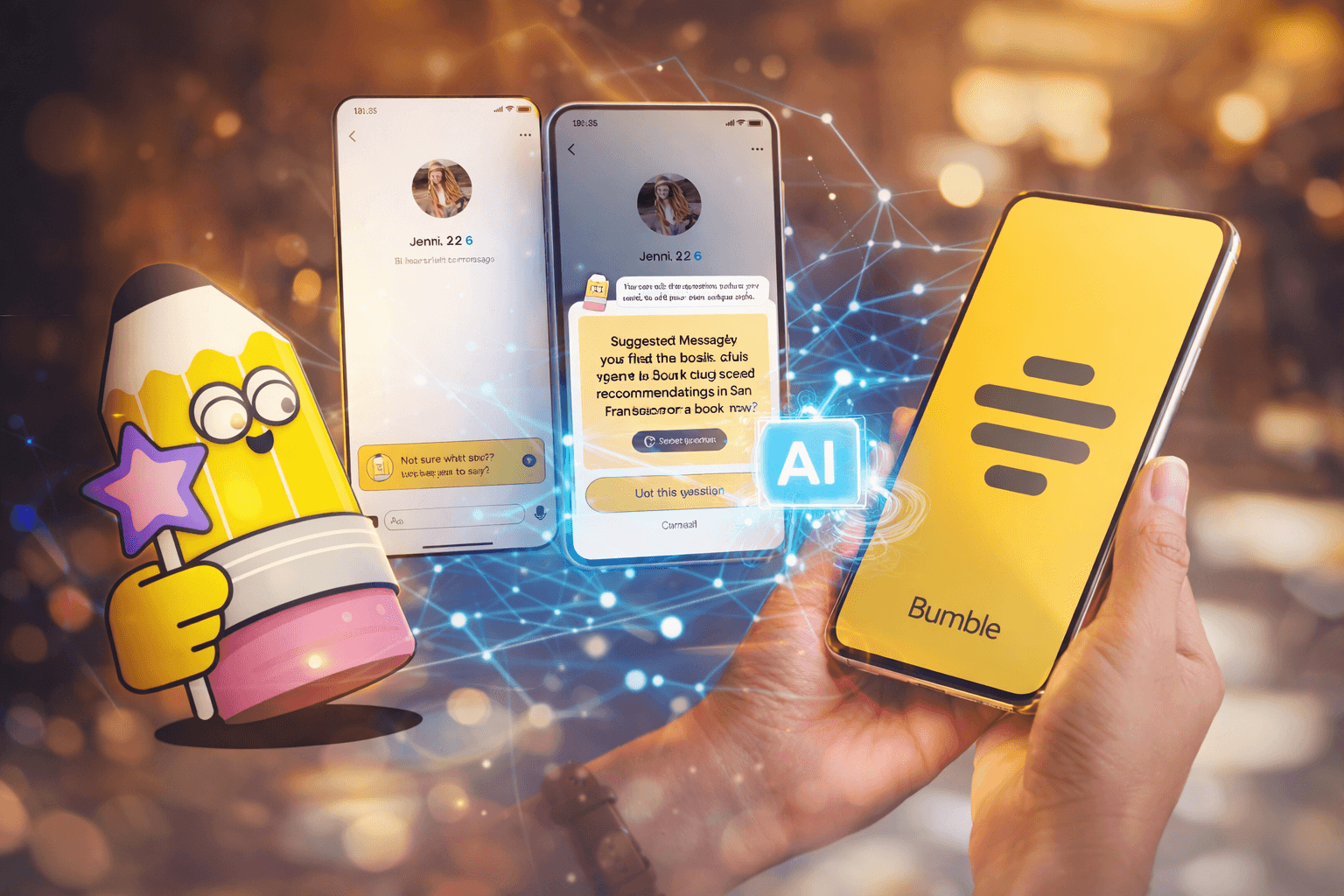
How Bumble's AI Is Changing Dating
AI / NLP | 5 min read
A Forbes survey last year found that 78% of singles were experiencing burnout from dating apps — a trend that has translated into noticeable user declines and slowing revenue across major platforms. Now Bumble is fighting back with its most ambitious reinvention yet: Bee, an AI-powered assistant designed to act as a personal matchmaker, sitting at the core of what the company is branding as Bumble 2.0.
Meet Bee: Bumble's AI Wingman
Unveiled during Bumble's Q4 2025 earnings call, Bee engages users through private onboarding conversations to understand their values, relationship goals, communication styles, lifestyles, and dating intentions. Using natural language processing, Bee analyses these insights to surface compatible matches — providing users with a summary explaining exactly why two people make a strong pairing, rather than leaving them to judge on profile photos alone.
Bee is currently in a pilot programme being tested internally, with a beta launch imminent. In the future, Bumble says Bee will expand into additional areas — including offering date suggestions and requesting anonymous feedback from prior matches to continuously refine its recommendations.
AI as Infrastructure, Not a Gimmick
"We don't see AI as a gimmick layer on top of swiping. It really needs to be an infrastructure for better relationships. It should not just be a chatbot layered on top of something."
— Whitney Wolfe Herd, Founder and CEO, Bumble
Wolfe Herd has stated that Bumble is "rearchitecting the entire Bumble experience from start to finish" — a claim backed by the company's decision to build an entirely new cloud-native, AI-first platform expected to go live around mid-2026. Rather than layering new features onto legacy code, Bumble is constructing a foundation designed for AI from the ground up, powering everything from profile creation to match recommendations and conversation prompts.
Dates: Matching Without the Friction
Powered by Bee, Bumble's upcoming Dates experience connects matched pairs directly — without requiring public profiles or initial message exchanges. When Bee identifies two compatible users, both are notified in the app with an explanation of their compatibility. The aim, according to Wolfe Herd, is to "remove some of the emotional friction that really sits between matching and meeting" — cutting straight to the point of connection rather than trapping users in what she describes as "dead-end chat zones."
Beyond Bee: A Suite of New AI Features
Bee is part of a broader wave of AI-driven innovation across Bumble's platform. Additional features already rolling out include:
- • AI-Suggested Profile Guidance — rolling out globally, delivering personalised, actionable feedback on bios and prompts to help members present themselves more authentically. Bumble's data shows that nearly 60% of members with strong bios see higher engagement in conversations.
- • AI Photo Feedback (US) — real-time, tailored suggestions to help users choose the best photos and present their most authentic self from the outset.
- • Chapter-Based Profiles — moving away from static profiles toward a richer storytelling format, giving Bumble's AI more data to power more nuanced recommendations.
- • Suggest a Date (Canada pilot) — allows users to signal readiness to meet in person when a conversation stalls, reducing friction at the moment it matters most.
"Profile Guidance empowers people to show up more authentically and completely, helping them start connections from a stronger foundation. When we reduce friction at the moments that matter most, we help people connect with clarity and confidence, and increase the likelihood of meaningful relationships forming offline."
— Vivek Sagi, Chief Product and Technology Officer, Bumble
Privacy by Design: Ephemeral Data and User Control
Bumble has embedded user privacy at the core of Bee's design. All onboarding conversations remain strictly confidential and never appear on public profiles. Users retain full control over which derived insights — such as shared values or lifestyle preferences — are visible to potential matches. This approach aligns with GDPR requirements and emerging AI ethics standards.
Technically, Bee employs ephemeral data processing — generating temporary semantic embeddings for compatibility matching without long-term server storage. This significantly reduces breach risks while maintaining transparency and user trust in a landscape where AI-powered personal data handling faces intense scrutiny.
The Financial Picture: Pressure and Promise
Bumble's Q4 2025 results reflect the pressures the platform faces. Revenue came in at US$224.2 million — down 14.5% year-on-year but above analyst expectations. Paying users stood at 3.3 million, while average revenue per paying user rose 7.9% to US$22.20, suggesting that while user numbers are declining, those who remain are spending more. The company's stock rallied approximately 40% on the earnings news — a signal that investors are placing a significant bet on the Bumble 2.0 vision.
Key Takeaways
- • Bumble's Bee AI assistant acts as a personal matchmaker, learning users' values and goals through private NLP-driven conversations to surface more meaningful matches.
- • The Dates experience powered by Bee connects matched users directly — without public profiles or initial messages — to remove emotional friction between matching and meeting.
- • Bumble is building an entirely new cloud-native, AI-first platform expected to launch by mid-2026 — designed from the ground up rather than retrofitted.
- • Bee uses ephemeral data processing and GDPR-aligned design, giving users full control over which AI-derived insights are shared with potential matches.
- • Q4 2025 revenue of US$224.2m beat expectations; the stock rallied ~40% on Bumble 2.0 optimism despite a 14.5% year-on-year revenue decline.