
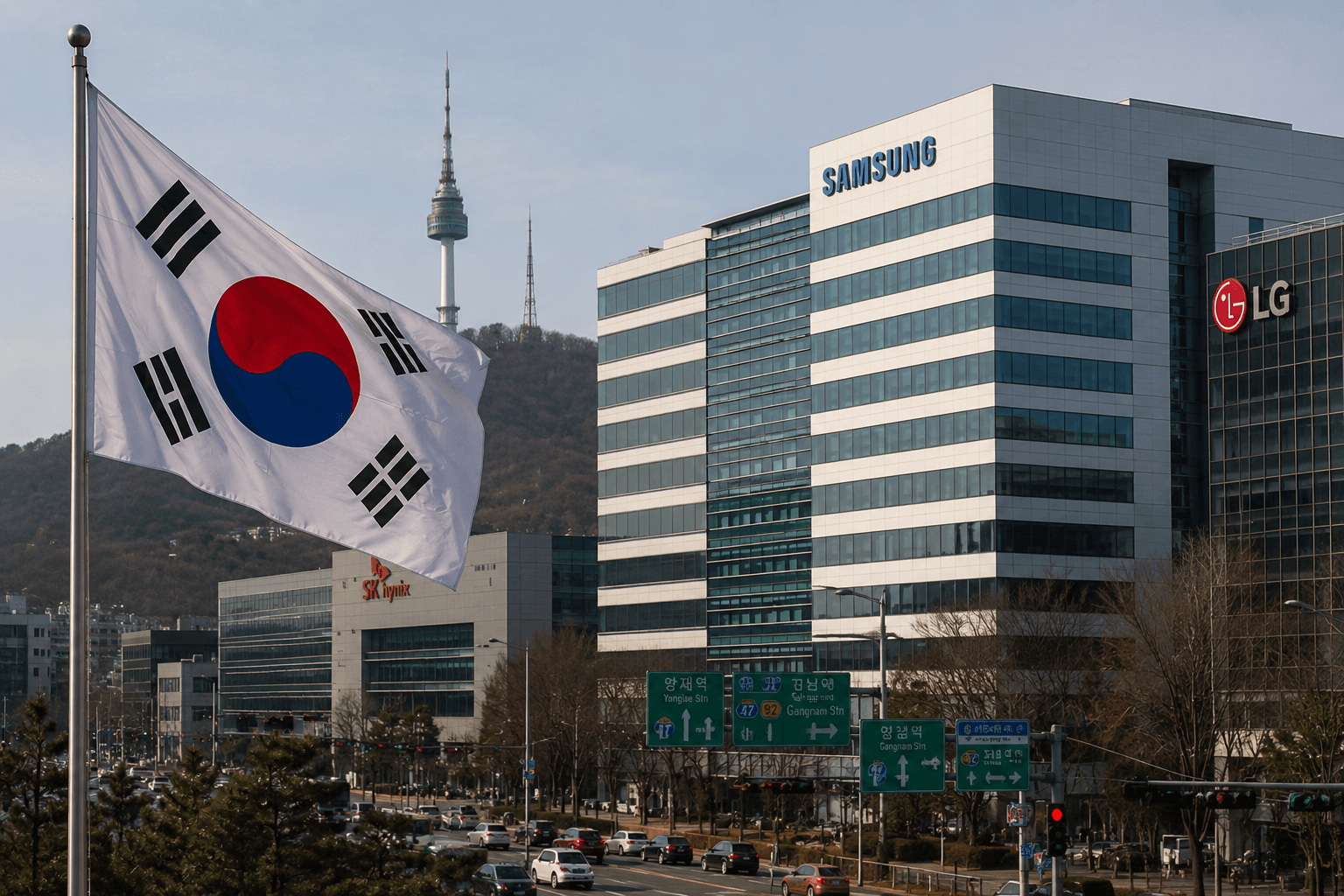
South Korea is deepening its bet on domestic chip production, launching a ₩5tn (US$3.52bn) state fund aimed at semiconductor materials, parts, equipment, and fabless companies. The initiative, unveiled by Presidential Chief of Staff Kang Hoon-sik following a meeting chaired by President Lee Jae Myung, is designed to accelerate advanced manufacturing hubs and reinforce the country's position as home to industry titans Samsung Electronics and SK hynix.
Targeting the Supply Chain
The state fund targets promising chip materials, parts, equipment, and fabless companies, with the goal of accelerating construction of advanced manufacturing hubs across the country. Alongside the fund, the government will provide a further ₩5tn (US$3.52bn) in trade finance for suppliers.
These measures form part of President Lee's semiconductor megaproject initiative, first unveiled in June 2026, under which Samsung Electronics and SK hynix are expected to invest more than US$576bn alongside suppliers and local governments. A separate 10-year, ₩1tn (US$704m) programme will support cooperation between large companies and smaller suppliers across development, testing, and production.
Building the Physical Backbone
The government plans to seek passage of a Mega Special Zone Act at parliament within the year to speed up permits, environmental reviews, and infrastructure construction. President Lee has also urged the Defence Ministry to relocate functions of a military air base in Gwangju by mid-2028, clearing the way for a new semiconductor manufacturing complex on an 8.3 million-square-metre site designated as a candidate national industrial complex.
For the Gwangju-South Jeolla chip cluster, authorities plan to secure 650,000 tonnes of water daily by 2030 using recycled wastewater and dam supplies. For the Yongin semiconductor cluster, the plan calls for 14.7GW of electricity by 2041, drawing on cogeneration, LNG generation, and power imported from other regions.
"Megaprojects worth more than ₩350tn (US$246.4bn) in other regions of the country are scheduled to begin construction or facility expansions in 2026, with a further ₩57tn (US$40.1bn) of research and development projects also due to start."— Kang Hoon-sik, Presidential Chief of Staff, South Korea