
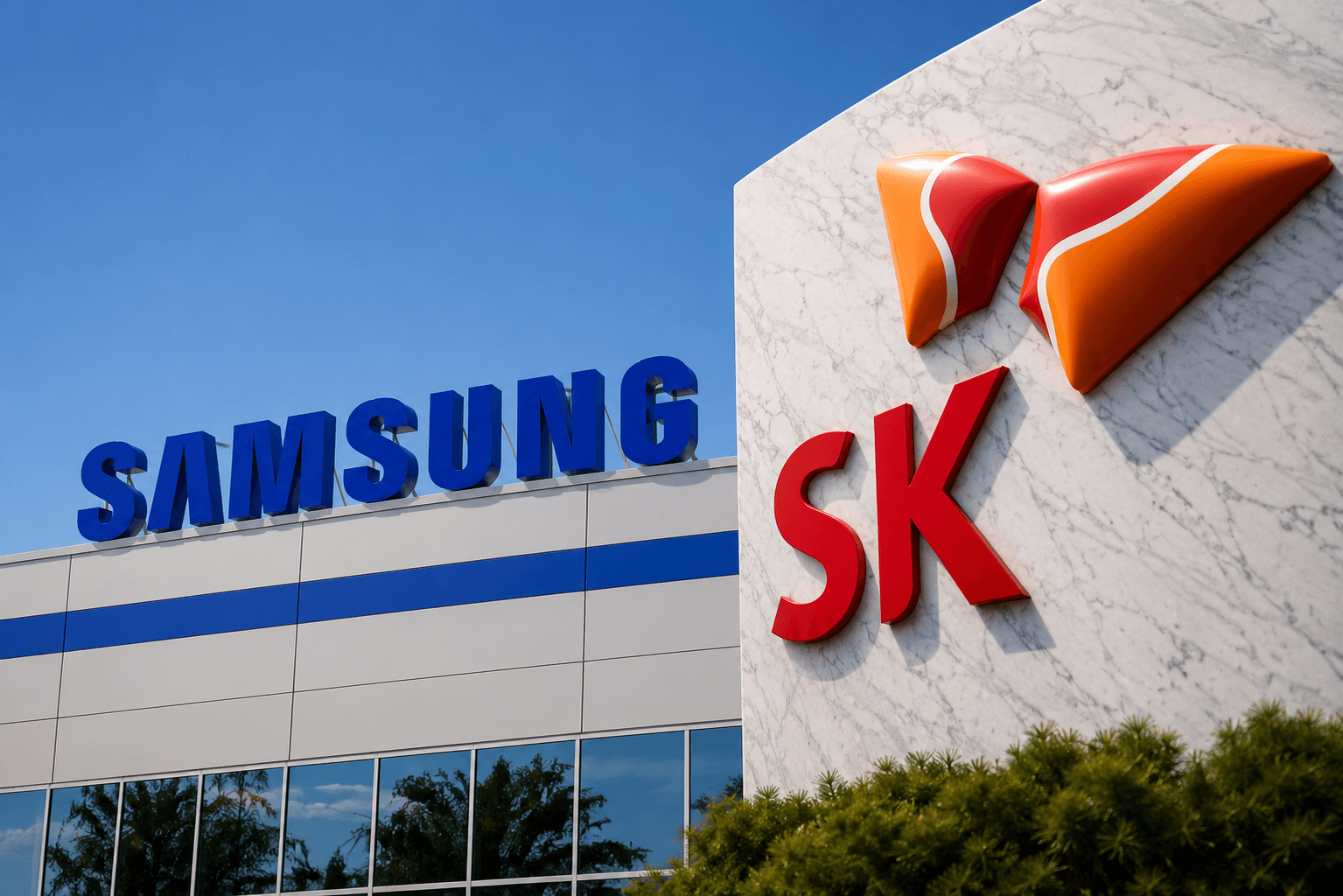
Two decades after nearly collapsing under a debt crisis, SK Hynix has overtaken longtime rival Samsung Electronics to become the world's most valuable memory chipmaker, a turnaround fueled almost entirely by its early bet on high-bandwidth memory (HBM) for the generative AI boom.
From Near-Bankruptcy to Trillion-Dollar Club
In 2002, what was then Hynix Semiconductor was on the verge of being sold to Micron after an aggressive expansion drive left it crippled by debt. The deal collapsed, and the company spent nearly a decade under creditor control, with shares sinking as low as 135 won (US$0.09) in 2003, earning it the nickname "Dongjeon-ju," or penny stock, in Korean.
The recovery accelerated dramatically this year. In May, SK Hynix entered the trillion-dollar club. By Monday, 22 June, its shares had closed up 5.6%, lifting its market capitalisation to 2,080.4tn won (US$1.35tn) — edging past Samsung's 2,066.7tn won (US$1.34tn), excluding preferred shares.
The Gen AI Boom's Biggest Beneficiary
A severe memory downturn in 2023 pushed SK Hynix to an annual operating loss of 7.73tn won (US$5.02bn). The turnaround began a year later as the gen AI boom gathered momentum and companies including Microsoft, Google, and Meta invested heavily in AI infrastructure, helping SK Hynix post a record annual operating profit of 23.5tn won (US$15.26bn) in 2024.
Central to this rebound was the company's decision to keep investing in HBM even during the downturn. HBM chips are stacked vertically to deliver faster performance and lower power consumption, and unlike conventional memory, they are tightly integrated with gen AI processors, creating higher barriers to entry and stronger pricing power for suppliers. By 2025, SK Hynix held 61% of the global HBM market, well ahead of Samsung's 17% and Micron's 21%.
"The emergence of customised AI memory fundamentally changed the industry's economics and allowed SK Hynix to establish itself as the market leader."— Suwhan Kim, Senior Analyst, Meritz Securities
A Two-Decade Strategic Bet
SK Hynix was founded in 1983 as a unit of Hyundai before being spun off and purchased by SK Group, the family-run conglomerate spanning telecoms to energy. Chairman Chey Tae-won faced strong internal opposition to the acquisition at the time, but described his long-term vision in a book published in January.
"What I really wanted to accomplish when we acquired Hynix was to transform it from a commodity memory producer into a mainstream semiconductor company whose products are indispensable. HBM is different. If SK Hynix's HBM is replaced with another product, the AI system may not function properly. What used to be a peripheral component has become a core component."— Chey Tae-won, Chairman, SK Group