
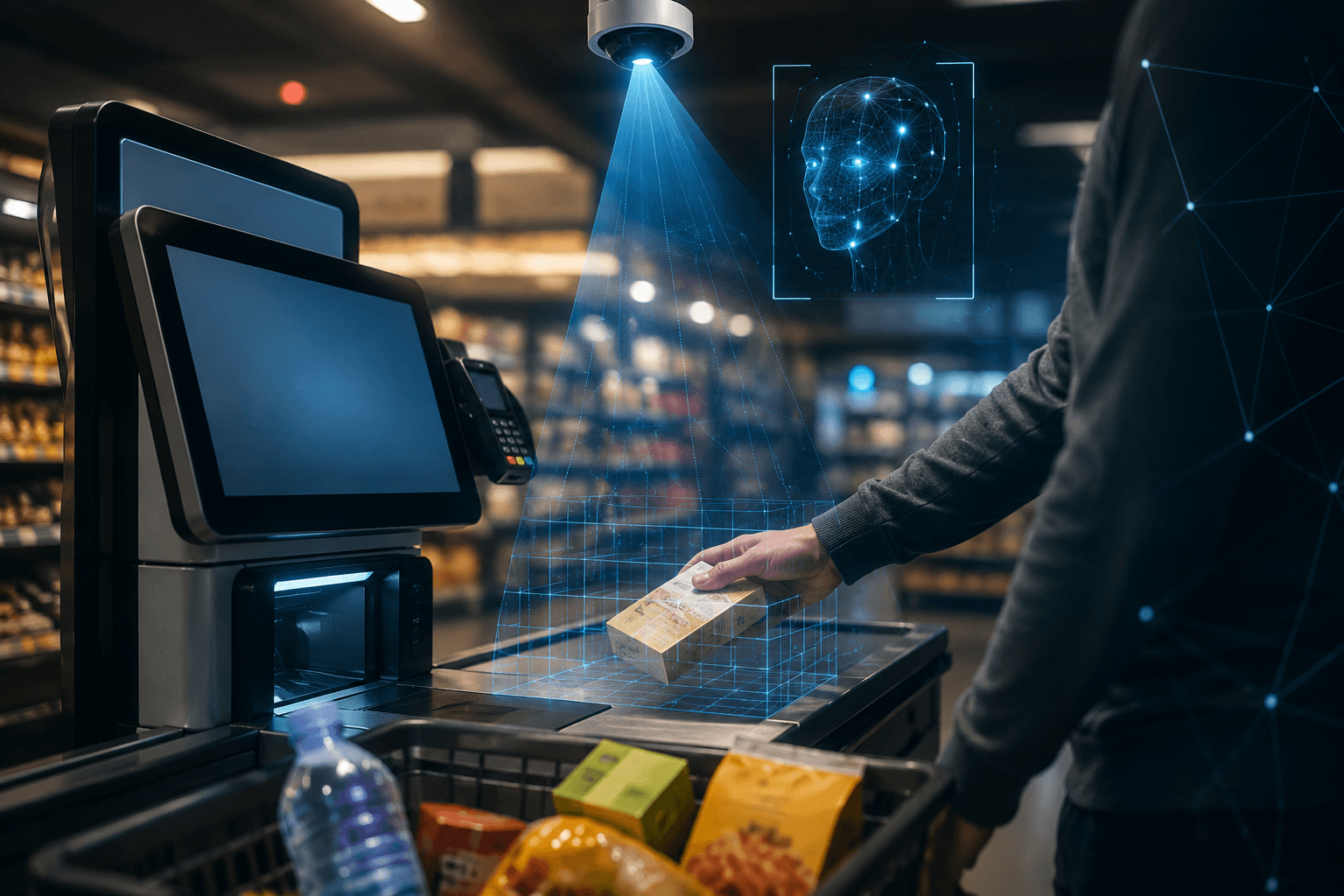
Self-checkout now accounts for more than half of grocery transactions, but the convenience comes at a cost: store losses climb by an average of 22% in the first year after rollout. Bruno Rothgiesser, Chief Architect at vision AI company Everseen, explains how real-time computer vision is helping retailers close the gap without turning every checkout into an interrogation.
Theft Versus Genuine Error
It's a common assumption that every missed scan at self-checkout is an attempt to steal. According to Rothgiesser, most losses actually come from ordinary behaviour, such as leaving an item sitting in the basket or getting distracted mid-transaction.
The real challenge for retailers isn't just detecting that a scan was missed, but understanding why it happened. Intelligence alone doesn't reduce loss — it has to trigger the right action at the right moment, and often that means giving the shopper a chance to correct an honest mistake before it becomes a loss event.
How Vision AI Reads Intent
Everseen's models are trained on real-world store activity rather than hypothetical scenarios, processing millions of retail transactions across live stores every day. That volume of genuine shopping behaviour is what allows the models to keep improving.
By combining what the cameras observe with what actually happens at the checkout, the system recognises patterns associated with loss — focusing on real-world behaviour rather than speculating about intent. That approach lets retailers respond proportionately while continually sharpening detection accuracy.
"Effective retail AI does more than automate tasks"— Bruno Rothgiesser, Chief Architect, Everseen
The "Soft Nudge" In Action
Rather than calling a colleague over immediately, a soft nudge presents an on-screen prompt paired with a short video replay of the missed scan or checkout error — giving the shopper a chance to fix it themselves before completing the transaction.
Because most checkout issues stem from genuine mistakes, the majority of shoppers respond right away. Research from ECR Retail Loss shows nudges trigger in roughly 3%–10% of self-checkout transactions, with customers self-correcting in 80%–97% of cases — cutting unnecessary interventions and freeing staff to focus on genuinely higher-risk situations.
Calibrating Against False Positives
Every intervention carries a cost. If a shopper could have corrected a genuine mistake themselves, pulling in a colleague only adds friction — and if alerts fire too often, staff start ignoring them while customers grow frustrated.
That's why calibration matters. While Everseen's models learn from millions of real shopping interactions, each deployment is tuned to the specifics of the individual store — layout, lighting, and camera positioning included. The goal isn't to maximise alerts, but to make sure every intervention is proportionate to the situation.