
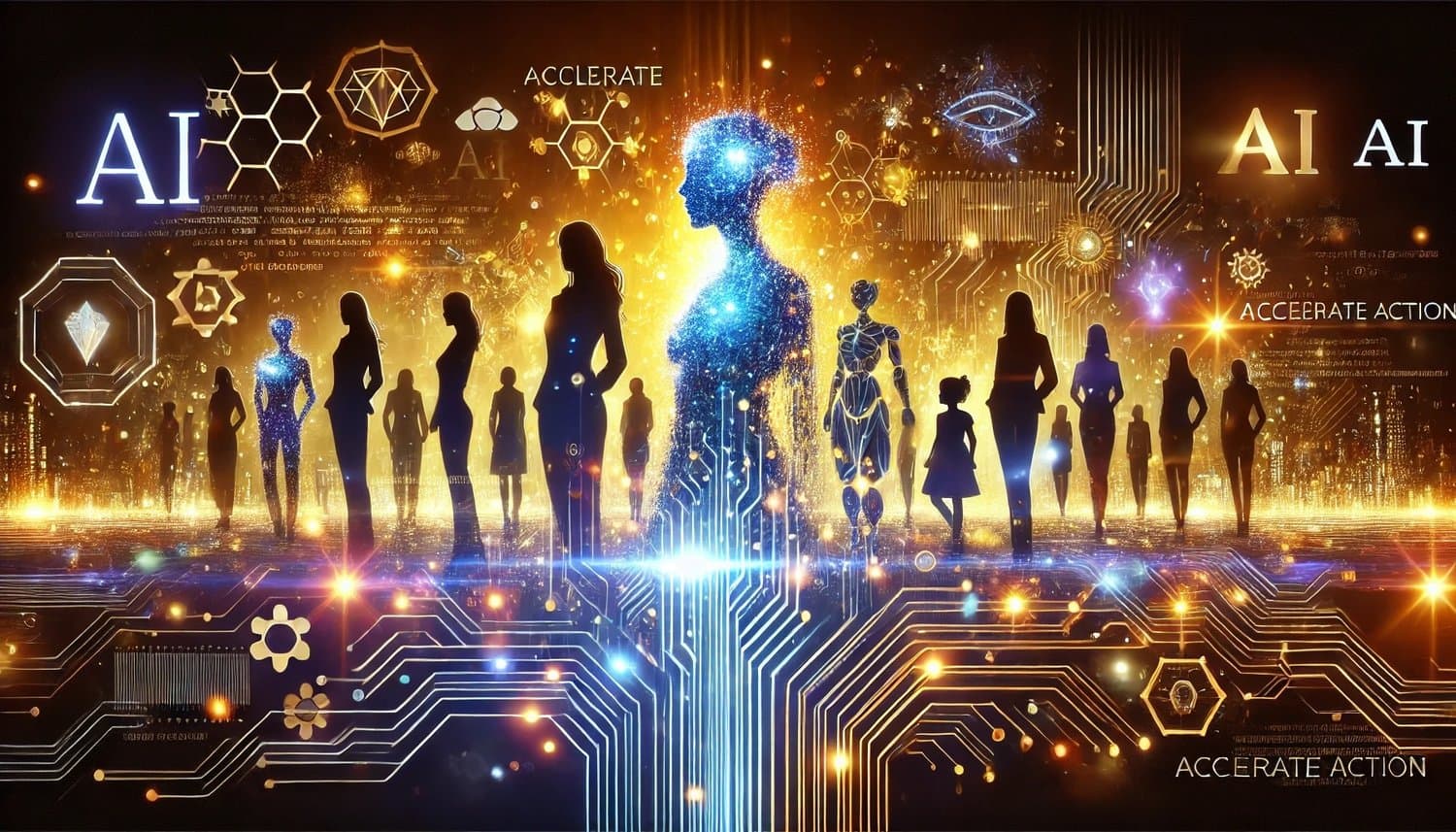
The rise of women in the fields of data science and Artificial Intelligence (AI) is not just a moment of progress—it is a movement reshaping the future of technology. With groundbreaking contributions across machine learning, AI, and data analytics, female professionals are driving innovation, challenging industry norms, and inspiring the next generation of leaders.
As organizations globally turn their focus toward diversity, equity, and inclusion, women are increasingly at the forefront of change. Their tech leadership is evident in every corner of the data science field—from the development of AI technologies to pushing boundaries in research and industry applications. As a result, we are witnessing a shift towards more inclusive and forward-thinking models in tech.
In this article, we spotlight some of the most influential women in data science and AI, whose expertise and vision are changing the landscape and encouraging others to follow in their footsteps.
1. Cassie Kozyrkov: Champion of Decision Intelligence at Google Cloud
Cassie Kozyrkov is one of the most influential voices in the world of data science and decision intelligence. As the Chief Decision Scientist at Google Cloud, she is leading the charge in democratizing decision-making by integrating AI into decision processes across industries.
Her work focuses on ensuring that AI is not just a tool for automation but a strategic asset that drives human-centered decision-making. Kozyrkov has personally trained over 20,000 Googlers in statistics, decision-making, and machine learning. She frequently shares insights on platforms like Medium and Twitter, engaging a global audience on the responsible use of AI.
2. Fei-Fei Li: A Pioneer in AI and Machine Learning
Fei-Fei Li’s contributions to AI, particularly in computer vision, are groundbreaking. As co-creator of ImageNet, she has laid the foundation for many modern deep learning applications. Her innovations have impacted sectors from healthcare to autonomous vehicles.
Li also co-founded AI4ALL, a nonprofit that works to increase diversity in AI education and research. She is a passionate advocate for equitable access to technology and strives to create inclusive opportunities for underrepresented groups in tech.
3. Usha Rengaraju: AI Innovator and Kaggle Grandmaster
Usha Rengaraju is a leading force in AI, recognized as India's first female Kaggle Grandmaster. Her expertise spans probabilistic graphical models, deep learning, and data storytelling.
She organized India’s first NeuroAI conference and serves as an ambassador for AI Med, focusing on the intersection of AI and healthcare. Beyond her technical achievements, she is committed to mentoring and uplifting women in the tech community.
4. Cindi Howson: Data Strategy Visionary at ThoughtSpot
Cindi Howson is the Chief Data Strategy Officer at ThoughtSpot. With decades of experience, she helps businesses harness the power of data for strategic advantage.
Previously, she served as VP at Gartner and founded BI Scorecard. She hosts The Data Chief podcast, where she interviews data leaders on innovations and challenges in analytics. Her influence is inspiring more women to pursue careers in BI and analytics.
5. Anima Anandkumar: Leading AI Research for Scientific Innovation
Anima Anandkumar is a renowned AI researcher whose work spans machine learning, tensor methods, and AI for scientific discovery. She holds a professorship at Caltech and leads ML research at NVIDIA.
Her innovations have impacted fields like climate modeling, physics simulations, and drug discovery. Anandkumar continues to break barriers in AI while advocating for open research and diversity in science and technology.
6. Emily Glassberg Sands: Head of Data Science, Coursera
Emily Glassberg Sands leads data science at Coursera, where she applies data to personalize education and improve learner outcomes.
With a Ph.D. in Economics from Harvard, her work focuses on leveraging data to make education more accessible and effective. She’s a strong advocate for using analytics to drive innovation in edtech and learning platforms.
7. Carla Gentry: Digital Marketing Manager, Samtec Inc.
Carla Gentry is a veteran data scientist with over two decades of experience across major brands like Hershey and Johnson & Johnson. Now at Samtec Inc., she merges data science with marketing strategy.
Gentry is a well-known voice on LinkedIn, where she shares practical insights and career advice. Her work exemplifies the wide applications of data science across industries.
8. Monica Rogati: Independent Data Science and AI Advisor
Monica Rogati is a prominent data science advisor and former LinkedIn data scientist. She now works independently, helping startups and tech companies develop AI strategies.
Her experience spans recommender systems, deep learning, and natural language processing. Rogati’s influence has shaped the data practices of numerous companies, both large and small.
9. Yael Garten: Director, Siri Analytics at Apple
Yael Garten leads analytics for Siri at Apple, focusing on voice technology and natural language processing. Previously at LinkedIn, she worked on user experience and data product strategies.
Her work emphasizes the power of data to enhance user interactions with AI products, making technology more intuitive and responsive to human needs.
The Challenges Ahead
Despite growing recognition, women in data science and AI still face systemic challenges. Unconscious bias, unequal access to mentorship, and slow progress in leadership representation remain significant hurdles.
Pipeline issues also persist. While more women are entering data science programs, transitioning into industry roles remains difficult without adequate support systems. Addressing these barriers requires intentional efforts from academia, industry, and policy makers.
In Brief
As data science and AI evolve, the importance of diversity, equity, and inclusion becomes more apparent. The contributions of these remarkable women demonstrate the power of representation and inclusive innovation. By nurturing talent across all backgrounds, the future of technology can become more ethical, impactful, and representative of the world it aims to serve.