
DIGITAL TRANSFORMATION HEALTHCARE AI

Telefónica Tech Deploys AI to Screen Lung Cancer in Spain

TM
Techmediaglobal
| 4 min read
124
CLINICAL FINDINGS DETECTED
780,000+
X-RAY STUDIES USED TO TRAIN
3+
RADIOLOGISTS PER LABELLED STUDY
CE IIb
EU MEDICAL DEVICE CERTIFICATION

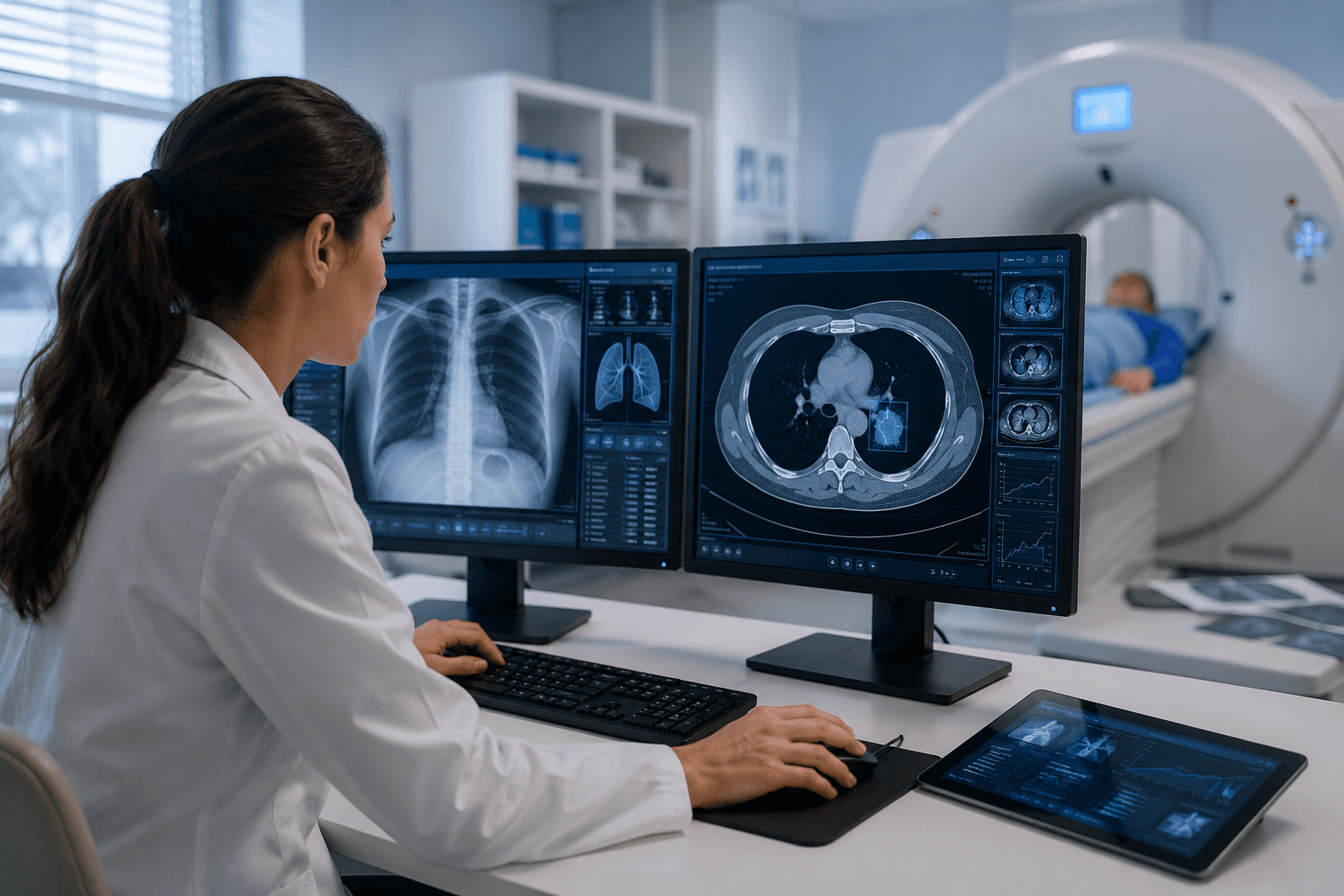
Telefónica Tech has expanded its deployment of clinical decision support software across Spain's regional health services, partnering with global healthcare technology company Harrison.ai to help doctors rapidly prioritise urgent cases. The AI tool analyses chest X-rays for up to 124 clinical findings, including pulmonary nodules that could indicate lung cancer, giving clinicians a faster second opinion without replacing their final say on diagnosis and treatment.

Training and Certification Standards

According to Harrison.ai, the algorithm was trained on data from more than 780,000 chest X-ray studies, with at least three qualified radiologists independently labelling each study during development.

The system holds Conformité Européenne (CE) IIb medical device certification, representing the highest level of assurance for diagnostic support tools in the European Union and permitting use in potentially lethal health conditions. It confirms compliance with EU legislation governing safety, efficacy and quality for medical devices.

How the System Works

Healthcare professionals can access AI-generated insights through a standard web browser. The technology provides a rapid second opinion on chest X-ray findings, while medical staff retain final authority on patient diagnoses and treatment decisions.

The system functions as a clinical decision support tool rather than an autonomous diagnostic device. Clinicians in accident and emergency departments or primary care units can also use the software to filter cases and identify which patients may require specialist referral.

Integration with Existing Infrastructure

The AI tool integrates directly into existing healthcare IT systems and radiologists' workflows. According to Telefónica Tech, this approach allows customisation to match technical and clinical requirements, and lets radiologists categorise cases by urgency, prioritising time-critical patients within their existing patient lists.

"The incorporation of AI into radiology represents a significant step towards more effective and efficient healthcare models, in which technology becomes an ally of healthcare professionals to deliver faster, more accurate and personalised care."

— Carlos Martínez, Head of Data and AI, Telefónica Tech

Clinical Workflow Benefits and Industry Reaction

The technology could reduce diagnostic response times by streamlining workflows and help detect diseases at earlier stages. Dr Aengus Tran, CEO and Co-founder of Harrison.ai, said the partnership brings clinically validated and scalable AI to healthcare professionals across Spain, adding that Telefónica's reach in the country supports the shared goal of reducing the gap in healthcare capacity. He noted the aim is to help clinicians detect diseases such as lung cancer earlier, prioritise urgent cases, and ensure no findings are missed, while limiting unnecessary specialist referrals.

Dean Bubley, Founder and Director of Disruptive Analysis, commented on the partnership on LinkedIn, noting it aligns with the "AI Factory" vertical solution strategies pursued by some telecom operators, mostly in Asia. He described the integration approach as the right one, arguing that enterprises are unlikely to re-architect their IT and AI portfolios around a telco's network-based compute, though shifting large volumes of X-ray imagery could indirectly drive network upgrades in some regions.

Key Takeaways

  • Telefónica Tech has expanded Harrison.ai's chest X-ray AI across Spain's regional health services to help doctors prioritise urgent cases.
  • The AI detects up to 124 clinical findings, including pulmonary nodules that could indicate lung cancer.
  • It was trained on more than 780,000 chest X-ray studies, each independently labelled by at least three radiologists.
  • The tool holds CE IIb certification, the EU's highest assurance level for diagnostic support software.
  • It functions as a clinical decision support tool, not an autonomous diagnostic device — doctors retain final authority.
  • Industry analysts see the deployment as an example of telcos pursuing vertical "AI Factory" strategies rather than re-architecting client IT.
Tags: Healthcare AI Lung Cancer Screening Telefónica Tech Harrison.ai Radiology Spain Clinical Decision Support Digital Health