
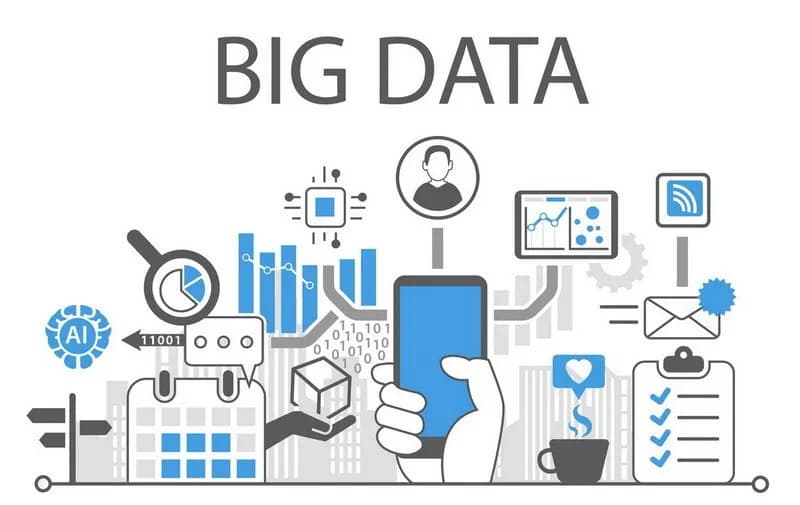
Big Data and Its Transformative Power
Big data has become integral to the modern world, revolutionizing how we collect, manage, and analyze information. It has opened up new possibilities and opportunities across various industries, from healthcare to finance to marketing.
Big data provides a more comprehensive understanding of trends and patterns by integrating diverse data sets to form a complete picture. This fusion facilitates retrospective analysis and enhances predictive capabilities, allowing for more accurate forecasts and strategic decision-making. Additionally, when combined with AI, big data transcends traditional analytics, empowering organizations to unlock innovative solutions and drive transformational outcomes.
According to McKinsey Global Institute, data-driven organizations are 23 times more likely to acquire customers, 6 times more likely to retain them, and 19 times more likely to be profitable.
With Big Data Comes Big Responsibility
Data-driven organizations have demonstrated a distinct competitive advantage in recent years. However, the immense capabilities of big data come with ethical and operational responsibilities.
Volume and Complexity: As data volumes double each year, organizations must develop scalable and effective data storage and processing strategies. Simply storing data is not enough; it must be cleaned, processed, and formatted to be useful.
Cybersecurity Threats: Traditional security measures are becoming obsolete. Organizations must adopt advanced strategies to protect data from ransomware and other threats.
Environmental Impact: Data centers contribute significantly to energy consumption and carbon emissions. Balancing sustainability with performance requires investments in green technology and operational efficiency.
Guidelines for Building a Successful Big Data Foundation
1. Align Data with Business Goals
Set clear objectives that connect data usage with broader strategic goals. This alignment prevents wasted effort and resources while maximizing the value extracted from data.
2. Resource Management
Clearly defined goals guide proper allocation of budget, personnel, and technology. Misaligned resources can hinder progress and result in inefficiencies.
3. Implement a Flexible Data Governance Framework
Establish rules for data ownership, access, and compliance. A practical data governance framework ensures consistency, quality, and security across the organization.
4. Prioritize Data Quality
High-quality data is the backbone of effective analytics. Leaders must invest in tools and processes that maintain data integrity, accuracy, and completeness.
5. Strengthen Data Security and Privacy
Implement role-based access controls, encryption, and incident response strategies. Adopt ethical practices like differential privacy and be transparent with data collection policies.
6. Streamline Data Integration
Break down data silos using automation and integration tools to enable unified data views and support more reliable decision-making.
7. Foster a Data-Driven Culture
Leaders should champion data-informed decision-making and provide employees with accessible tools and training to harness data effectively.
8. Adopt Sustainable Practices
Reduce the environmental impact of data management by monitoring emissions, training teams in carbon literacy, and investing in energy-efficient infrastructure.
9. Stay Informed on Trends
Participate in industry events, attend workshops, and network with data professionals to remain current on emerging technologies and best practices.
Best Data Management Tools
- Ataccama ONE MDM: AI-powered platform for data governance and automated quality control.
- Reltio Data Cloud: Offers multidomain MDM and entity resolution across hybrid data environments.
- Stibo Systems MDM: Enables businesses to gain transparency and control of master data.
- Profisee Platform: Flexible, cost-effective MDM platform for unified, high-quality data across cloud or on-premise setups.
The Future of Data: A Growth Opportunity
Driven by advances in connectivity, IoT, and AI, global data volume is skyrocketing. According to Statista, the global big data market is projected to reach $103 billion by 2027.
This surge presents challenges, but also vast opportunities. Organizations that embrace data innovation, invest in infrastructure, and focus on responsible management will gain a decisive edge.
In Brief
Effective data management is crucial in the digital era. From maintaining data quality to embracing sustainability and complying with regulations, businesses that master data governance and leverage advanced tools will improve efficiency, boost productivity, and drive long-term success.