
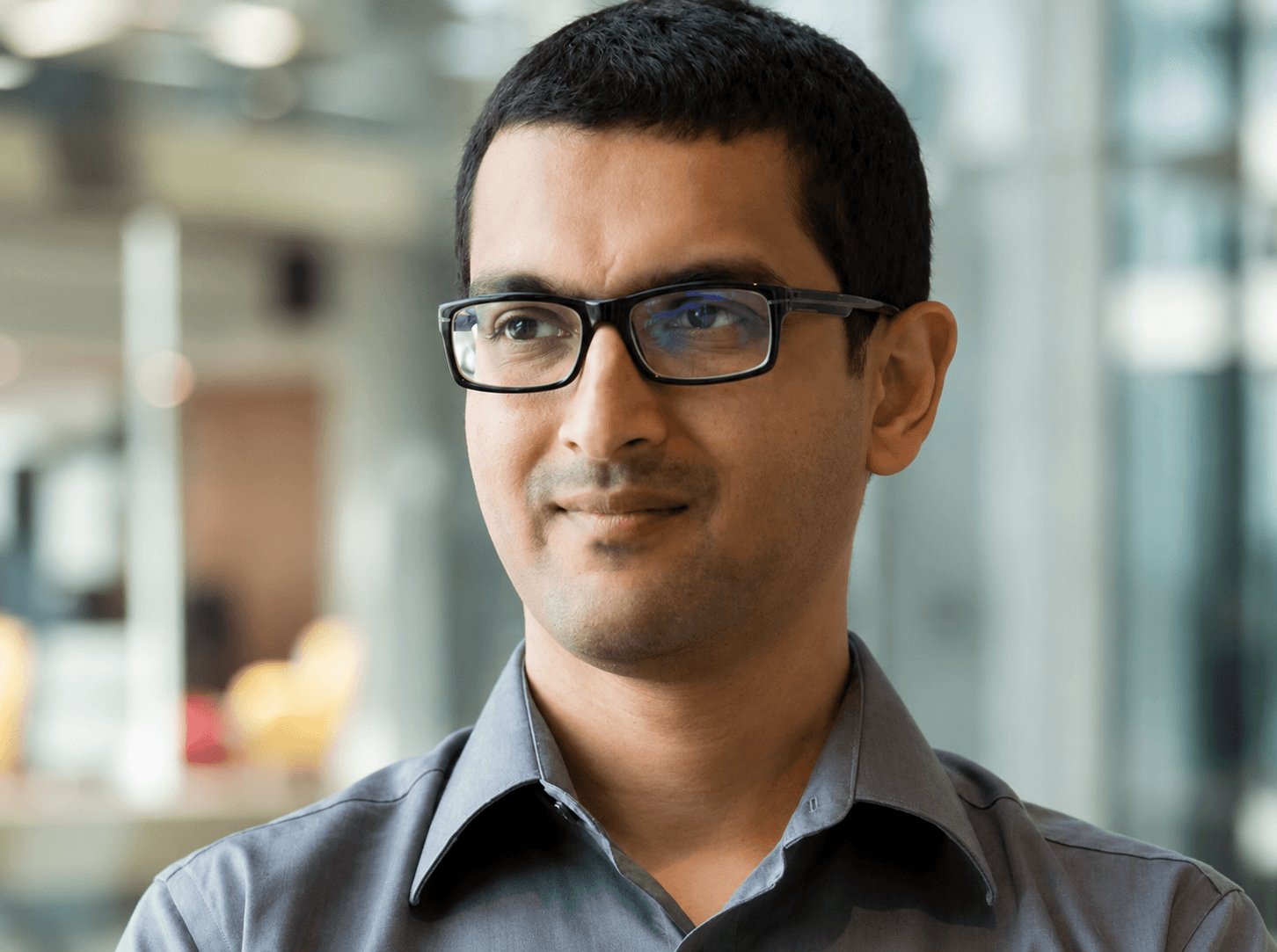
From building the computational backbone of India's billion-user Aadhaar identity programme to co-creating the Julia programming language, Viral Shah has spent his career chasing problems at massive scale. Now, as Co-Founder and CEO of JuliaHub, he is steering that same obsession with scale and efficiency toward physics-aware, agentic AI for industrial engineering.
What JuliaHub Does
JuliaHub provides AI-driven simulation and design solutions for hardware engineering, helping organisations eliminate the bottleneck between initial design concepts and validated, real-world performance.
Its flagship platform, Dyad, acts as an autonomous engineering partner. Paired with leading LLM technology, Dyad can generate, simulate and validate complete physical designs from scratch, integrating rigorous physics-based modelling with AI workflows to automate system simulation while strictly enforcing physical laws.
Dyad is built on the Julia platform and language, now the industry standard for high-performance scientific computing, trusted by over 1,000,000 users across 10,000 companies worldwide.
The "Aha!" Moment: Compilers Over Libraries
Julia's origins trace back to 2009, when Shah and his collaborators realised that compilers, not libraries, were the key to solving problems at scale. Libraries, he explains, are trapped in the domain they were built for, while a compiler can operate generally across many domains at once.
That insight shaped JuliaHub's entire trajectory: Julia became a programming language for scientists, and Dyad became a physics compiler for engineers, neither locked into a single niche, both capable of tackling complex, multi-physics, multi-scale problems traditional software could never touch.
"We didn't want to just solve one specific problem; we wanted a general-purpose technology capable of combining entirely different ideas to create new products."— Viral Shah, Co-Founder and CEO, JuliaHub
From Developer to Global CEO
Shah describes his early relationship with Julia as intimate, centred on solving the notorious "two-language problem" and proving a technical thesis. As CEO, his focus has shifted to empowering product development teams globally with the technology built by some of the field's leading engineers at MIT and beyond.
He notes that autonomous AI agents now let him stay anchored to the Julia community and codebase even as his role has scaled, a pattern he sees mirrored across many senior technology executives.
Dyad 3.0: Agentic Simulation for Physical Systems
Traditional physical systems design is slow and fragmented, with engineers spending weeks manually building mathematical models and tuning parameters by hand. Dyad 3.0 changes this by embedding autonomous engineering agents directly into a physics-based simulation engine.
Engineers can hand the agent plain-language requirements or a PDF specification, and it automatically researches the underlying mathematics and builds the multi-physics model, self-correcting its code to enforce conservation laws and unit consistency and prevent hallucinations.
Powered by Julia and SciML, Dyad 3.0 accelerates simulations up to 100x and can instantly compile designs into embedded C code for physical hardware, delivering up to a 10x productivity boost for industrial R&D.
Case Study: Detecting Pump Faults With Binnies
During a six-week trial with water engineering services provider Binnies, Dyad detected specific pump fault conditions, including early signs of bearing degradation, with up to 95% accuracy.
Rather than relying on separate models for design and operations, Dyad lets a single physics-based model run across a system's entire lifecycle, from engineering and optimisation through to real-time monitoring and predictive maintenance.
For a water utility, catching a failing bearing before it causes a breakdown means maintenance can be planned proactively, avoiding costly emergency repairs and service disruptions, a shift Shah describes as central to building more resilient infrastructure.