
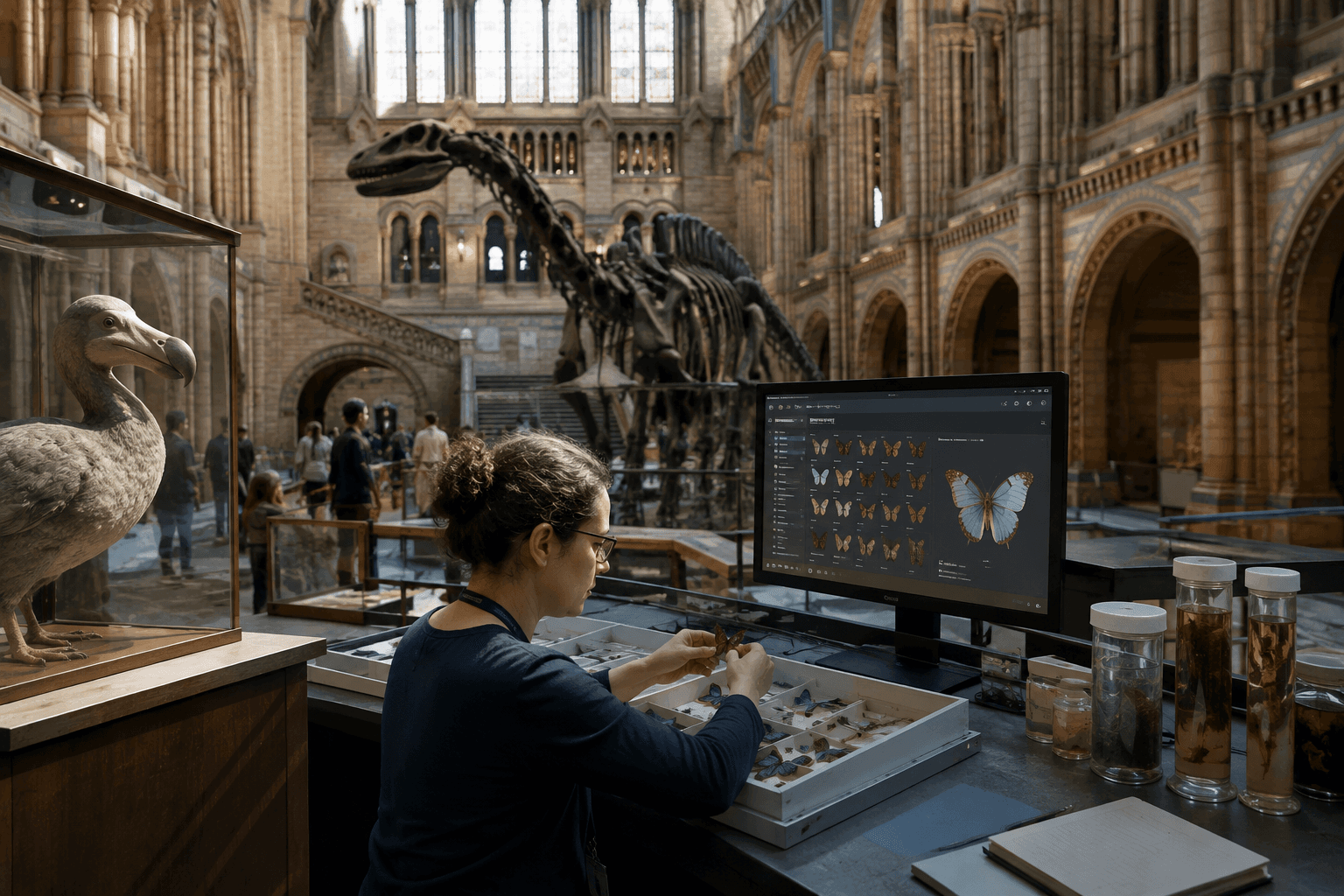
Amazon Web Services (AWS) is working with London's Natural History Museum (NHM) to build cloud infrastructure for biodiversity monitoring and environmental research. The partnership processes coastal seaweed surveys, environmental DNA samples and urban garden sensor records from across the UK, turning citizen science and lab data alike into tools for tracking the planet's ecological health.
Cloud Processing for Marine Data
AWS is analysing more than a decade of coastal survey data collected through the Big Seaweed Search, a citizen science programme run by the NHM and the Marine Conservation Society that lets members of the public log seaweed species spotted on UK beaches.
The technology turns these public observations into mappable datasets that track changes in coastal biodiversity over time. Benjamin Town, UK Nature Recovery and Community Science Coordinator at the NHM, presented the work at the museum's Night for Nature event during London Climate Action Week in June, noting it has been "a real success in sharing the valuable data that so many of our community scientists contribute."
The partnership also applies cloud computing to process environmental DNA (eDNA) samples taken from water, allowing researchers to identify marine species from genetic material left behind in aquatic environments — a technique that can help assess coastal habitat condition and track biodiversity trends.
Scalable Infrastructure for Research
AWS and the NHM have built a cloud-based Data Ecosystem to store and process biodiversity research at scale. As lead sponsor of the museum's Urban Nature Project, AWS provides the infrastructure needed to manage environmental data collected from the museum's five-acre South Kensington gardens.
The platform allows researchers to store datasets in a secure environment that can expand as data volumes grow, bringing together biodiversity and environmental records for integrated analysis — with the potential to eventually be shared with partner institutions across the UK.
Environmental Sensors in Urban Settings
The Urban Nature Project has converted the museum's gardens into a monitored research site fitted with environmental sensors that collect temperature, sound and ecological data, alongside eDNA sampling to identify species from traces in soil, water and air.
The Data Ecosystem combines these live sensor readings with historical wildlife records dating back to 1995, giving researchers a long-run picture of how urban biodiversity responds to environmental conditions and conservation measures.
"Working with AWS to develop the Data Ecosystem will revolutionise the scientific work we undertake at the Museum. The data will form an essential tool in unlocking new solutions to the planetary ecological emergency."— Dr John Tweddle, Head of the Angela Marmont Centre for UK Nature, Natural History Museum