
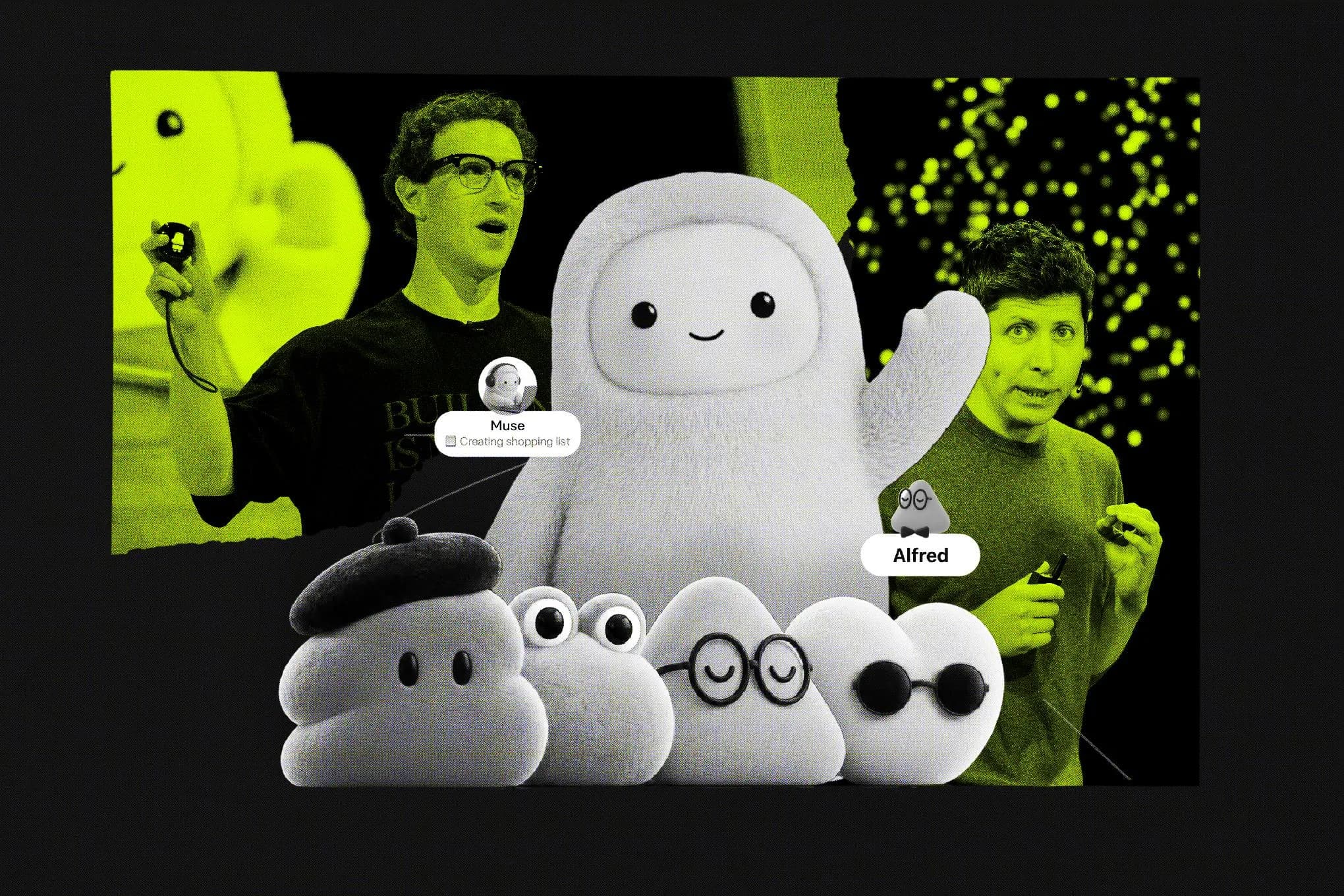
Meta and OpenAI are giving their AI agents friendly cartoon faces. They hope this will draw in users well beyond the early-adopter crowd.
OpenAI launched Dots on September 29, at its DevDay conference in San Francisco, as a direct rival to Meta’s Muse. Both products use mascot-style characters that users can name. The pitch is that an agent which feels personal and approachable is easier to trust with real work than a plain chat box.
What Dots does
Dots are always-on agents that keep working toward a user’s goals in the background, even when no one is chatting with them. They run on OpenAI’s GPT-6 Astra model. Each has its own cloud computer and browser, and can reach more than 4,000 apps through ChatGPT’s plugin ecosystem. A user can start a task in ChatGPT and carry on with the same agent in Slack or Microsoft Teams. Texting a Dot is planned for later. OpenAI also plans for teams of specialised Dots to work together eventually.
OpenAI’s demos include comparing food-delivery options and waiting for approval before ordering, updating presentations, turning interview transcripts into social posts, and fixing software bugs. OpenAI says Dots “can do nearly anything.”
Where Dots is available
Dots are rolling out to ChatGPT Pro (from $100 a month) and Business Premium subscribers in eligible markets. Pro access excludes the European Economic Area, Switzerland and the UK. Enterprise customers get a beta that an admin must switch on. For the first month, Dot usage will not count against plan allowances.
Controls
OpenAI is stressing safeguards. Background research uses read-only tools. Custom Rules let users require approval for, or block, specific actions, and an Activity View lets people monitor and redirect the work. Sensitive tasks, such as changing a password, always stay with the user.
Meta’s head start
Meta moved first. Muse was released on September 8 and topped Apple’s free App Store charts within days. It has been downloaded more than 3 million times, according to Semafor, and passed 2.5 million US downloads by September 21, according to Sensor Tower. Muse is free with a usage cap, then $20 a month for full access. It has expanded into WhatsApp and Meta’s AI glasses, with shopping and payment integrations such as Shopify, Stripe and PayPal.
Investors have noticed. Meta’s shares rose roughly 30% in September. JPMorgan analyst Doug Anmuth raised his price target to $920 from $820 and said Muse could become “the most widely used consumer AI application since ChatGPT.”
OpenAI is betting its large ChatGPT user base will let it catch up. Sam Altman told CNBC that Muse “seems like a nice product” and said he doesn’t feel threatened by Mark Zuckerberg. Google is also in the race. It markets Gemini Spark as a “24/7 personal AI agent” across Workspace, Search and Android.
Trust is the open question
Giving agents access to inboxes, apps and payments raises the stakes, and the cute branding does not remove them.
Amazon has blocked Muse from shopping on its site.
One report says a Meta agent shared a Toronto man’s home address on Facebook Marketplace without his permission.
Wired reported that instructions extracted from Muse tell it to keep “a page for every person in the user’s life,” covering family, friends and colleagues. Meta says Muse draws on public information and what users choose to share.
OpenAI has delayed its next-generation model, GPT-6.1 Astra, after internal testing found it fell short of safety standards.
Neither OpenAI nor Meta has said how many people use their agents day to day. That number will show whether the mascots turn curious downloaders into regular users.
For more on AI agents, AI and marketing technology, visit SalesGarners and MarTech360 Hub.