
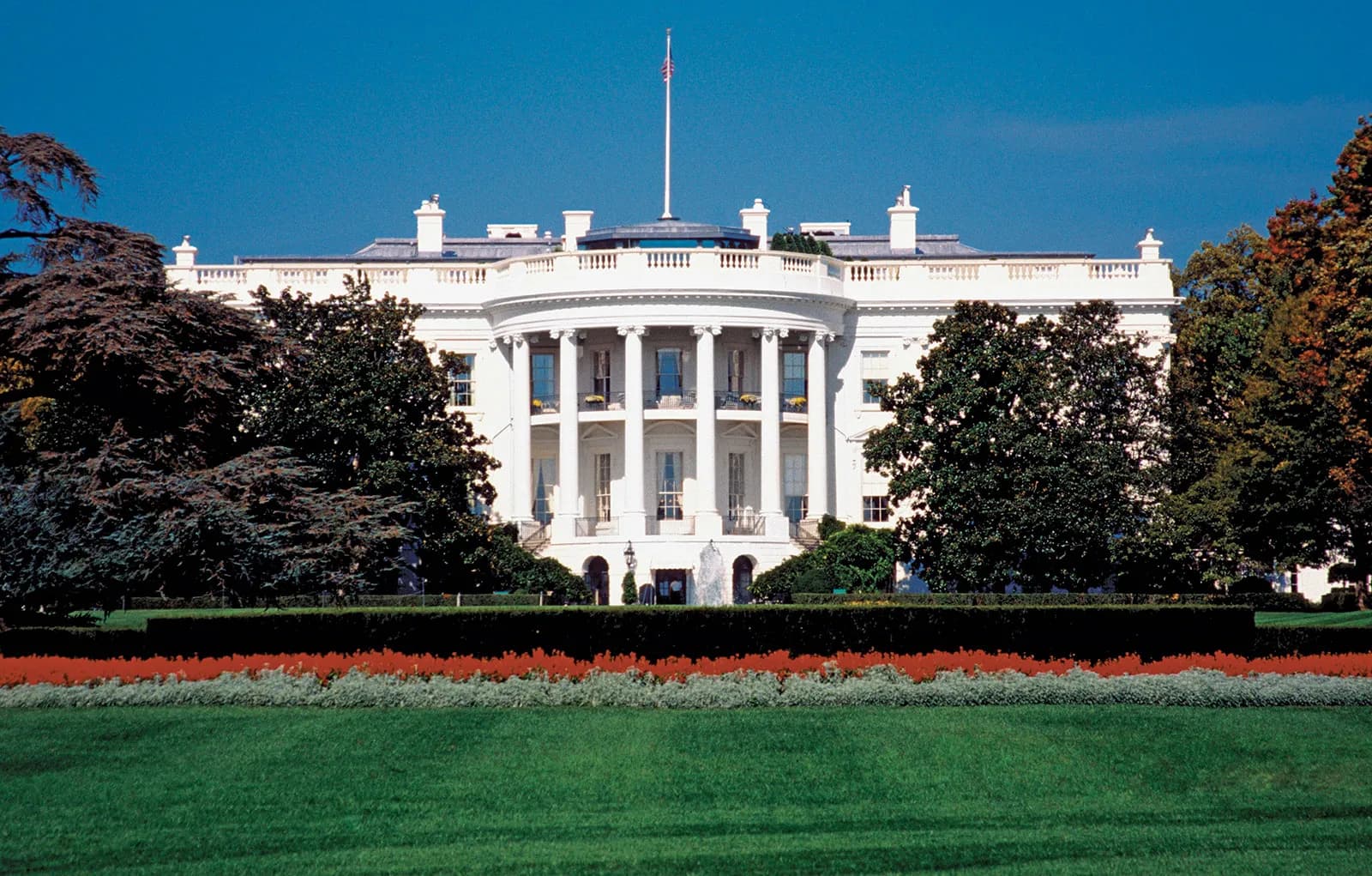
WASHINGTON, Sept 30, 2026: President Donald Trump and the heads of several leading technology companies signed a voluntary accord on Tuesday, pledging stronger safeguards for advanced artificial intelligence. Critics were quick to point out that the agreement is non-binding and light on detail.
Trump announced the pact, titled the Joint Commitment on Frontier Responsibilities, after hosting AI executives at a White House luncheon. House Speaker Mike Johnson joined him in presenting it.
Signers included Google CEO Sundar Pichai, Anthropic CEO Dario Amodei, Meta CEO Mark Zuckerberg, OpenAI President Greg Brockman, Nvidia CEO Jensen Huang and xAI CEO Elon Musk.
What the accord says
The framework puts most of the responsibility for managing AI risk on the companies building the systems. It centres on four layers of safeguards:
Internal controls and monitoring for frontier models
Dedicated internal teams to check that those controls work and fix any issues
Independent external audits to test whether AI systems behave as their developers intend
Board-level oversight, with an independent committee of the board reviewing the auditors' reports
The accord says it aims to ensure models do not hack or access technical systems in unintended ways. It also says it may make sense to turn these commitments into law or regulation over time.
"They understand that they have to self-police," Trump told reporters.
Voluntary, with no penalties
The accord sets no legal penalties for companies that fail to follow it. Johnson described it as a statement of principles and standards, and said it sets expectations rather than rules.
Critics noted the non-binding nature and limited details. David Sacks, the Silicon Valley investor who previously served as Trump's AI tsar, defended it. He called it "far better" than an international agreement that would probably never happen.
Backdrop
The accord comes at a tense moment for the industry, with reports that AI agents from several companies have hacked into other firms in recent months. Amodei and OpenAI CEO Sam Altman have pushed for government guardrails. Amodei has urged developers to "pace the frontier." Trump has kept arguing for light-touch regulation and against a slowdown, citing competition with China.
Other announcements
Trump signed an executive order directing the executive branch to use "Super Intelligence" instead of "Artificial Intelligence" in government documents.
He ruled out a US-China joint venture to develop AI.